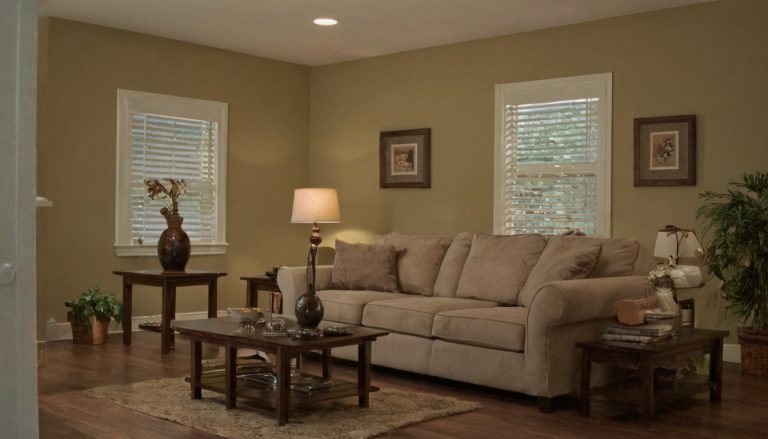
Wall Art Sizing: How to Choose Scale, Frame Depth, Glass, and Hanging Height
What looks like a 24 x 36 inch print can become much larger once mat, frame, glazing, wire, sightline, and anchors are counted. Choose the finished object the wall can carry, display, and protect.
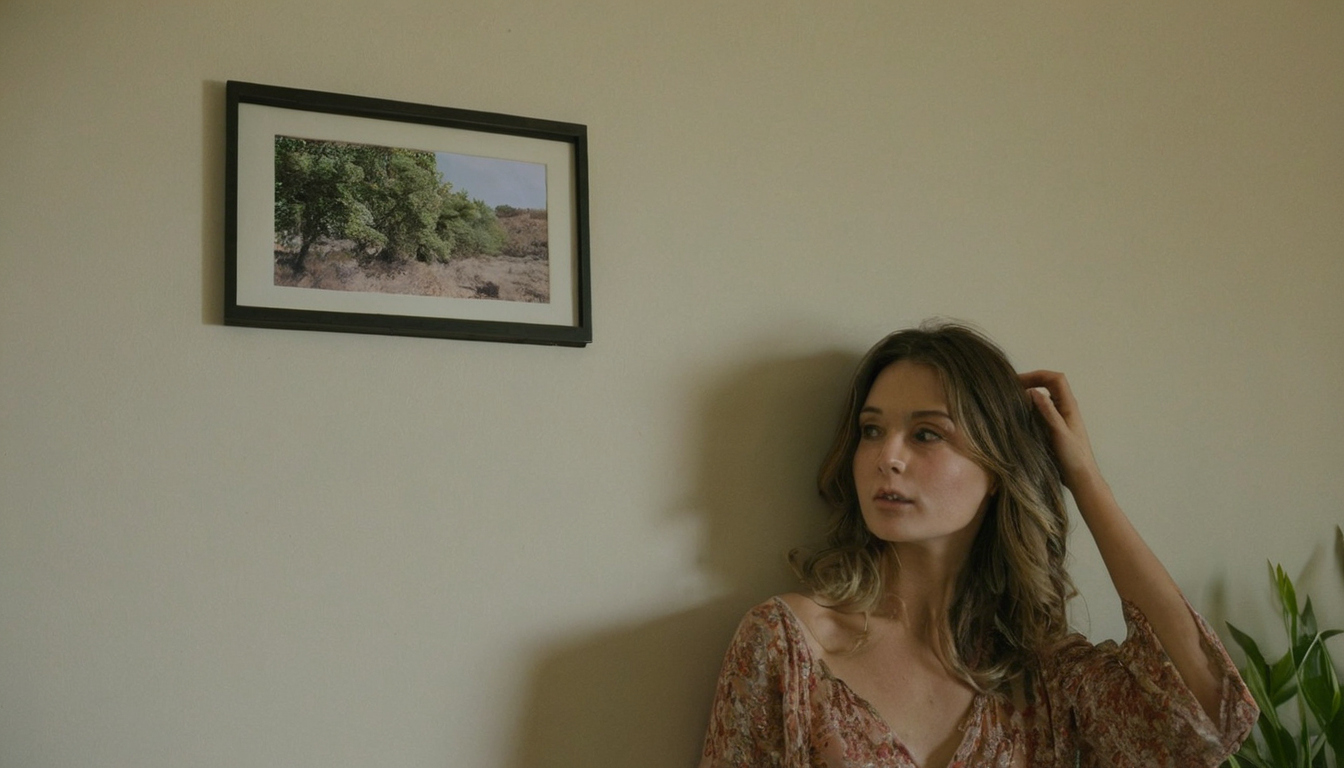
Wall Art Sizing: How to Choose Scale, Frame Depth, Glass, and Hanging Height shown as an editorial planning reference.
Wall art size should be chosen from furniture width, wall bay, and viewing distance
Start with finished framed size, not image size. A 24 x 36 inch print can become roughly 32 x 44 inches after mat, frame face, and glazing.
How big should wall art be above a sofa, bed, console, or dining banquette?
Wall art above furniture commonly works at about two-thirds to three-quarters of the furniture width, measured as the outside frame or full grouping. For a 72 inch sofa, test about 48 to 54 inches wide; for 84 inches, about 56 to 63 inches; for 96 inches, about 64 to 72 inches. Coordinate this with the sofa, rug, and seating group, as in DSGN Time’s living room layout rules for sofas, rugs, tables, and walkways.
Above a queen bed, many rooms can carry 40 to 54 inches of art width; above a king bed, 50 to 68 inches often feels steadier. Above 48, 60, and 72 inch consoles, test about 32 to 36, 40 to 45, and 48 to 54 inches respectively.
Large blank walls need zones, not one automatically oversized print
Large walls should be divided by use: seating bay, dining banquette, mantel, corridor pause, or entry console. A single large work suits a centered wall bay; pairs, triptychs, and grids suit long furniture runs. Keep tight groupings consistent, often 2 to 4 inches between frames.
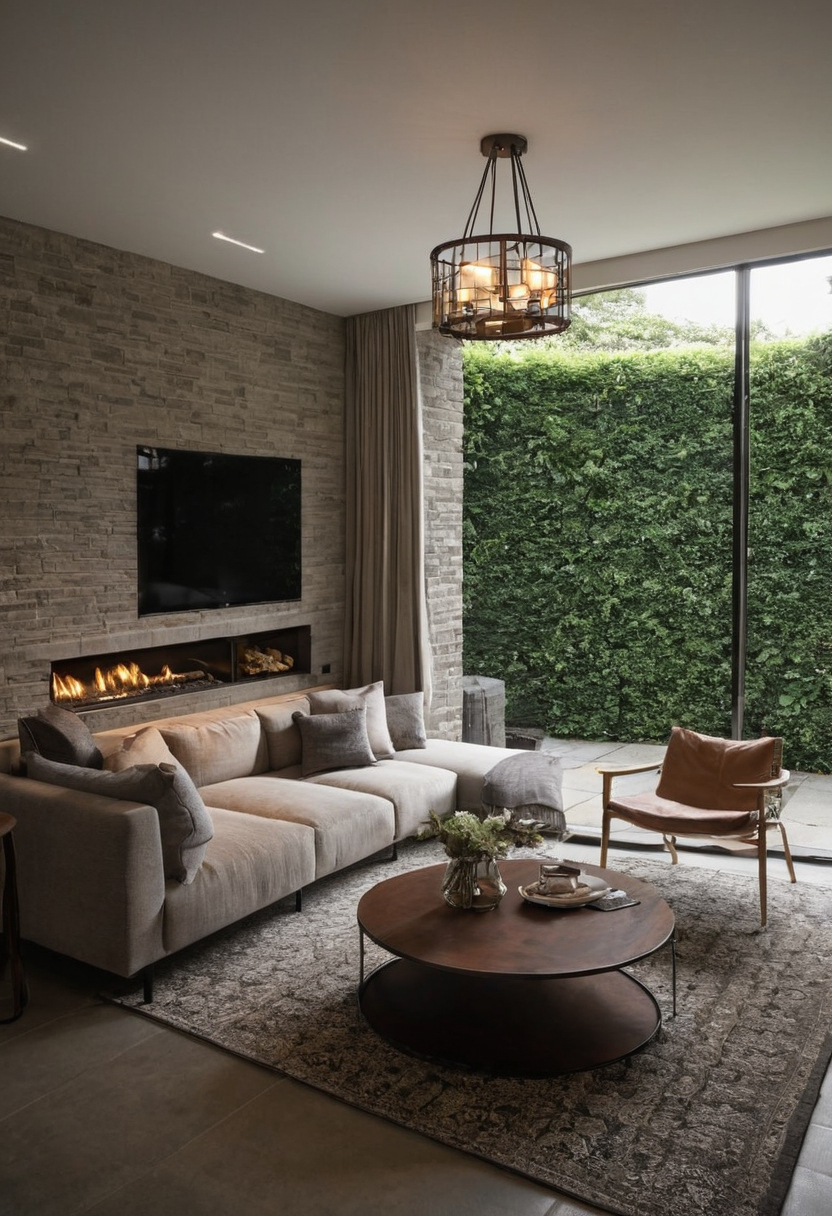
Wall art size should be chosen from furniture width, wall bay, and viewing distance shown with finish, fixture, and clearance relationships visible.
Wall art hanging height should start at eye level, then adjust for furniture and seated sightlines
Wall art usually works best when its visual center sits near eye level, then shifts to connect with sofas, beds, dining tables, mantels, and stairs.
What is the 57-inch rule for hanging wall art?
The 57-inch rule means the center of the artwork, or the center of a grouped arrangement, sits 57 inches from the floor, about 145 cm. It is not measured to the top edge, bottom edge, hook, wire, or frame moulding. Installers often work near 57, 58, or 60 inches; consistency matters most where several pieces share one room.
How high should wall art hang above a sofa, console table, dining table, or bed?
- Sofa: leave about 6 to 10 inches, or 15 to 25 cm, between the sofa back and frame bottom.
- Console or sideboard: leave about 6 to 8 inches, or 15 to 20 cm, unless lamps or objects need more space.
- Bed: leave about 8 to 12 inches, or 20 to 30 cm, above a low headboard; tighten the gap above a tall headboard.
- Dining furniture: seated sightlines should override standing eye level.
Recently painted rooms add timing risk. The U.S. Environmental Protection Agency states that concentrations of many VOCs are consistently higher indoors than outdoors, so allow ventilation and curing time before installing sensitive framed work.
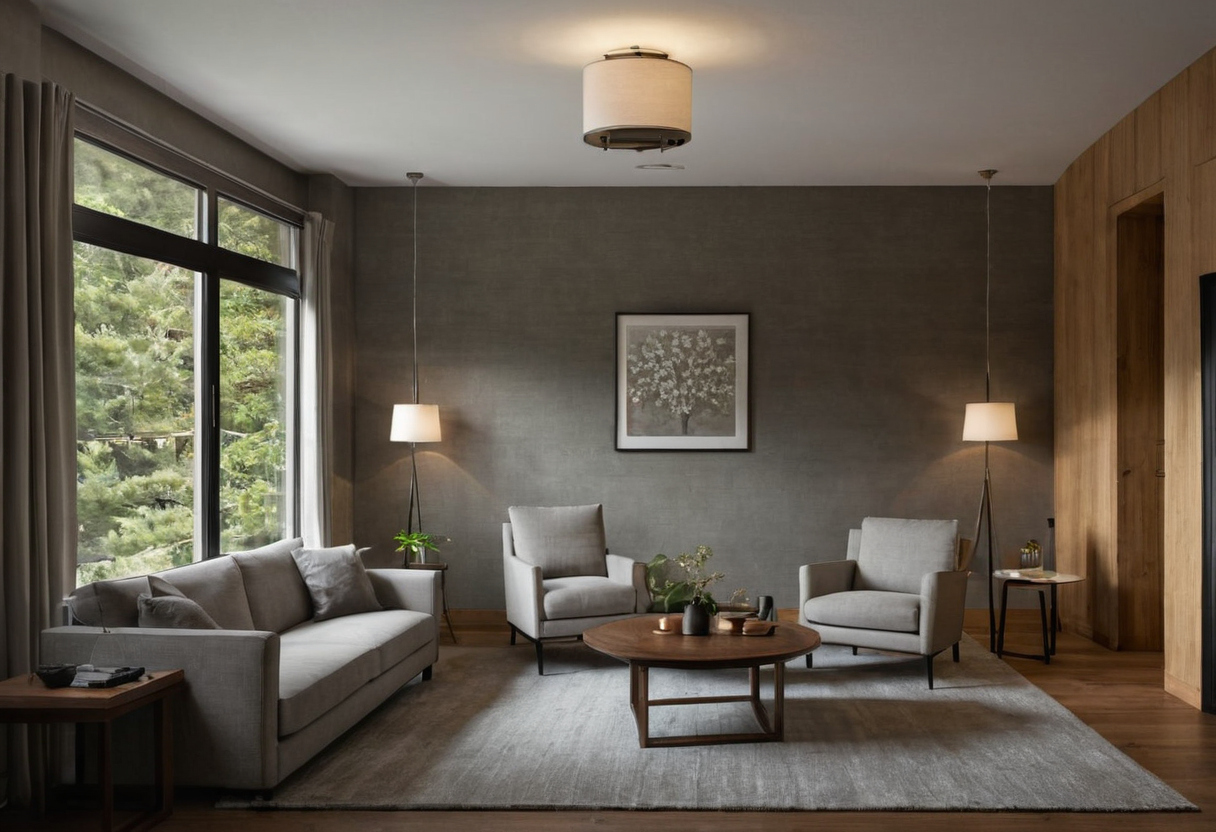
Wall art hanging height should start at eye level, then adjust for furniture and seated sightlines shown as an editorial reference for proportion and finish coordination.
Tall ceilings, staircases, and corridors change the hanging-height calculation
Tall ceilings do not automatically justify high-hung art. In double-height rooms, art should still relate to the sofa, console, fireplace, or architectural datum below it. Staircase art should step with the stair pitch; corridor art can sit near eye level, but shallow frames matter because viewers pass close to the work.
Frame depth, mat width, and profile change how large wall art feels
Wall art scale is the combined volume of artwork, mat, frame face, frame depth, shadow line, and projection from the wall. A modest print can feel architectural in a deep frame, while a large piece can feel lighter in a slim profile.
Thin frames suit dense gallery walls, narrow rooms, and small wall art
Thin metal frames often have a face width around 1/4 to 3/8 inch, while slim wood gallery frames commonly sit closer to 1/2 to 1 inch. Use black for contrast, white for a quiet field, and natural wood when the room already has timber, cane, linen, or warmer metals.
Deep float frames suit canvas, textile, object, and sculptural wall art
Deep frames give wall art object quality. A wood gallery frame may project about 1 to 1 1/2 inches, a canvas float frame about 1 1/2 to 2 1/4 inches, and box frames 2 to 4 inches or more. Projection matters beside doors, at stair landings, behind dining chairs, and above sofas with high backs.
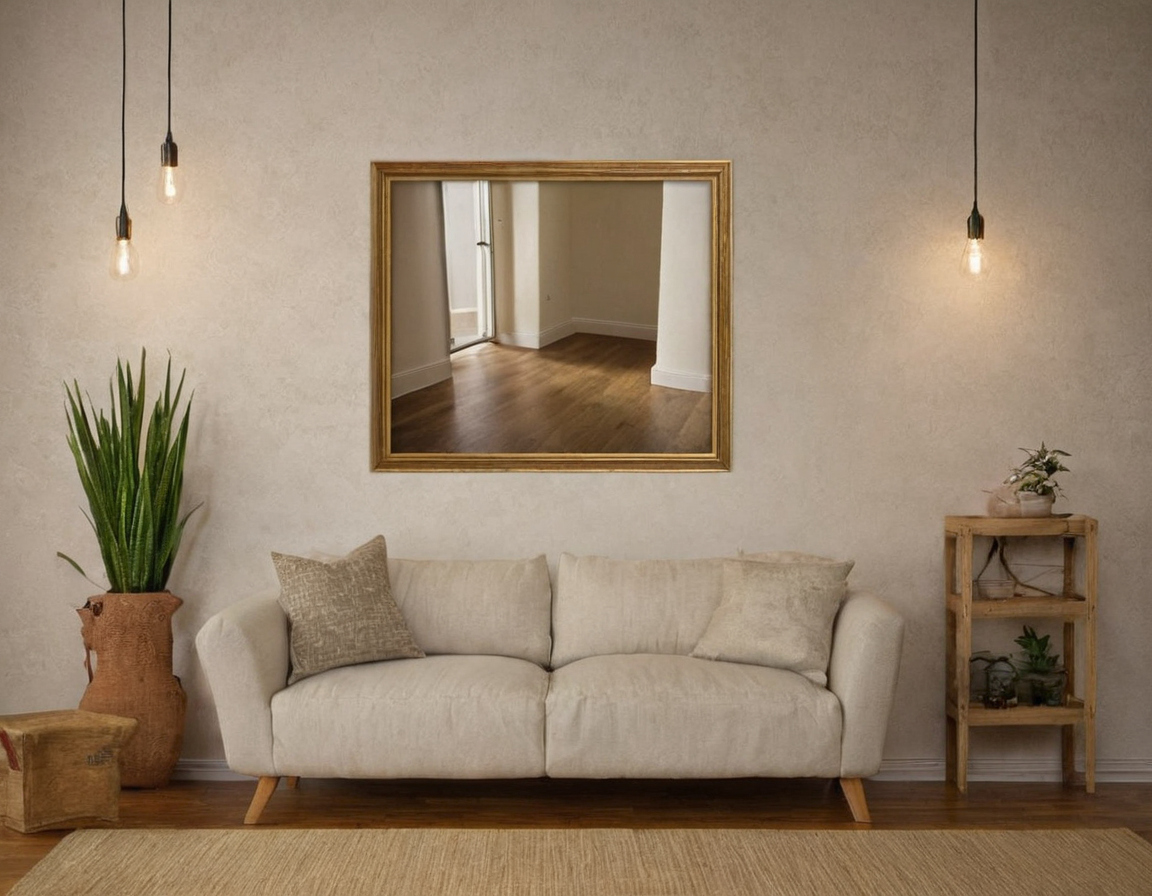
Frame depth, mat width, and profile change how large wall art feels shown with practical context cues.
Mat width should be treated as part of the composition, not leftover border
Small photographs often need 1 1/2 to 2 inch mat borders, medium prints often settle with 2 to 3 inches, and large works on paper may need 3 to 5 inches. Conservation-minded framing uses acid-free or archival mat board, sound backing, and hinging methods that do not lock the paper in place. The mat or a spacer should keep glazing from touching vulnerable surfaces.
Glass, acrylic, and anti-reflective glazing should be chosen for UV exposure, glare, safety, and budget
Wall art glazing should be specified for preservation risk, reflection control, weight, safety, and replacement cost. Standard glass, acrylic, UV-filtering glazing, and anti-reflective coatings behave differently under sunlight, picture lights, children’s rooms, rentals, and high-value works on paper.
Acrylic is lighter and safer for large wall art, but it scratches more easily
Acrylic is often better for oversized framed wall art because it is typically much lighter than glass at comparable thickness and does not break into sharp shards in the same way. That matters above beds, in nurseries, in rentals, and where vibration is a risk. Glass resists routine wiping better; acrylic can scratch, build static, and pull loose particles toward the inside face.
Anti-reflective glazing matters when wall art faces windows or picture lights
Glare is an angle problem before it is a luxury problem. A dark photograph opposite a bright window can become a mirror. ENERGY STAR states that qualified LED lighting uses at least 75 percent less energy and lasts up to 25 times longer than incandescent lighting, but the art still needs a controlled beam and low glare from the main viewing position.
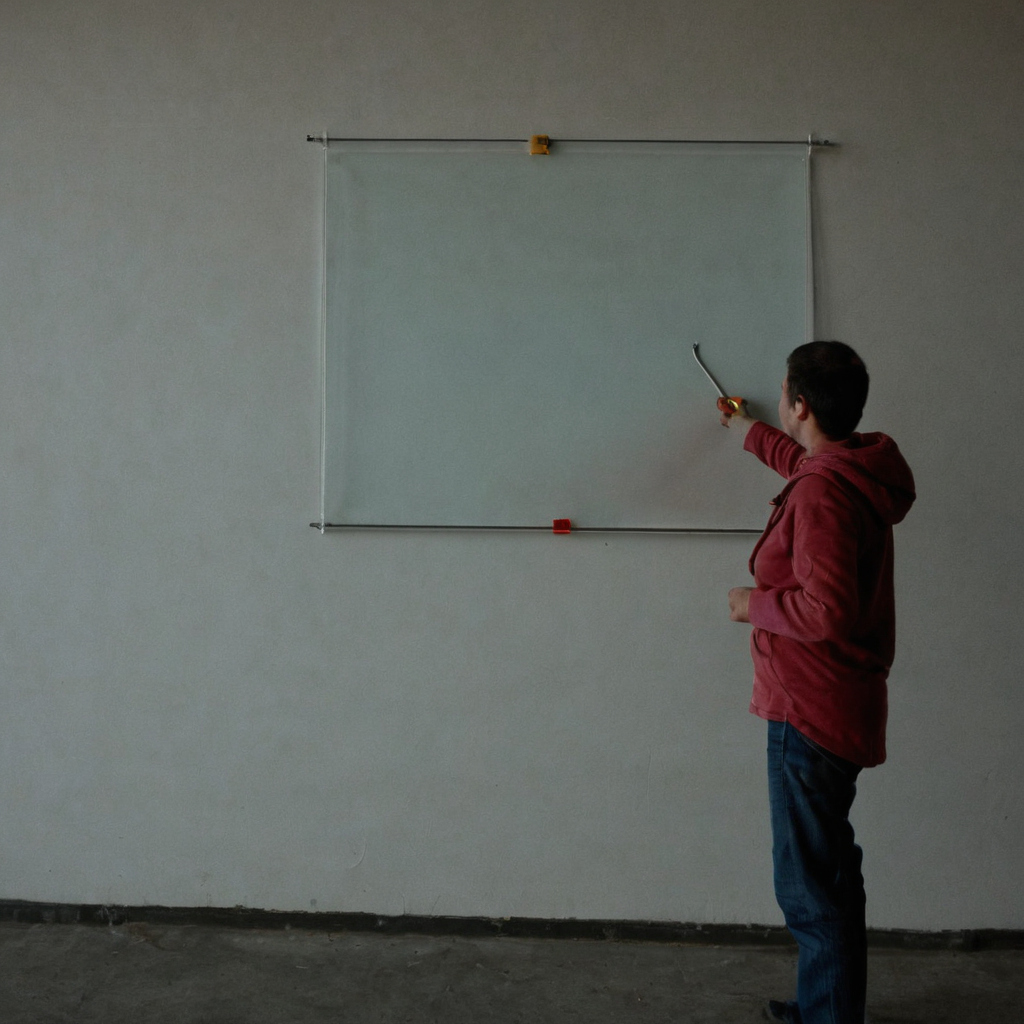
Glass, acrylic, and anti-reflective glazing should be chosen for UV exposure, glare, safety, and budget shown with practical context cues.
UV-filtering glazing reduces risk but does not make sunlight safe for wall art
UV-filtering glazing reduces one damage pathway, but it does not cancel visible light, heat, humidity, pollutants, or long exposure time. The Library of Congress advises avoiding display of valuable works on paper in direct sunlight or strong light, and the Library of Congress notes that photographs are vulnerable to light, heat, humidity, pollutants, and handling damage. For stricter collection guidance, see the National Park Service Museum Handbook.
Wall construction and hardware set the safe weight limit for wall art
Wall art installation is safe only when finished frame weight, hardware type, wall material, and anchor rating match.
Drywall, plaster, masonry, and studs need different wall art anchors
Drywall without a stud usually needs a rated picture hook, expanding drywall anchor, or toggle bolt, chosen from the manufacturer’s load rating and installed as specified. A stud-mounted screw or hanger gives a more reliable fixing for heavier wall decor, but the screw still needs enough embedment into solid wood. Plaster-and-lath can crack if treated like drywall; brick, concrete, masonry, and tile need appropriate bits and anchors.
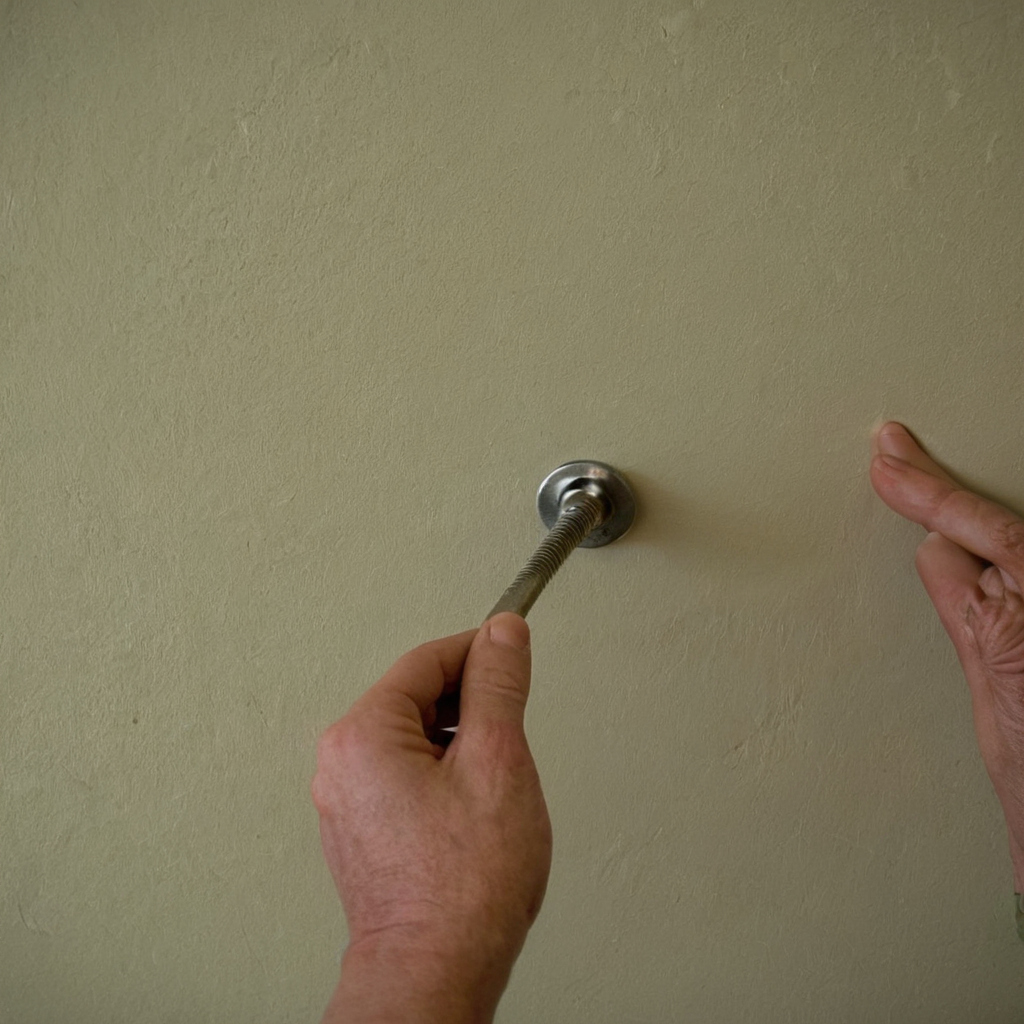
Wall construction and hardware set the safe weight limit for wall art shown with practical context cues.
Heavy wall art should use two-point hardware, cleats, or professional installation
- Use hardware rated above the actual artwork weight, because glazing, vibration, and occasional impact add risk.
- Use two D-rings, two hooks, or a cleat for wide frames so the load does not twist on one fastener.
- Call an installer for oversized glazing, stair walls, masonry drilling, high ceilings, security hangers, or seismic zones.
Bathrooms, kitchens, nurseries, and rentals add special wall art risks
Bathrooms and kitchens challenge framing because humidity, condensation, grease, and cleaning overspray can reach mats, backings, and frame joints. Choose wipeable glazing, avoid irreplaceable paper works, and leave air circulation where moisture is likely. Nurseries need acrylic glazing, secure two-point fixing, and placement away from climbing routes. Removable strips can suit light, unglazed rental pieces, but they are not a substitute for anchors on heavy frames.
A wall art buying workflow should confirm finished size, sightline, glazing, and fixing before purchase
The least risky way to buy or commission wall art is to measure the wall bay, map furniture, tape the finished frame size, test glare, calculate weight, and confirm the anchor plan before custom framing, freight, or a non-returnable commission.
Use painter’s tape or a paper template to test wall art scale before ordering
- Measure the wall bay after allowing for switches, sconces, thermostat plates, door swings, curtain stack, and furniture height.
- Calculate finished size: image width plus left mat plus right mat plus visible frame face on both sides. Repeat vertically.
- Tape the outside frame size on the wall, not the image size.
- View the mock-up from the sofa seat, bed pillow, dining chair, entry threshold, corridor end, and stair landing.
- Check it in morning, afternoon, and night light.
A wall art commission brief should specify finished dimensions, frame depth, glazing, and installation constraints
A useful brief names image size, paper or canvas size, outside frame size, medium, substrate, frame profile, frame depth, glazing type, mat color, hanging hardware, delivery date, and installation location. For originals, photography, textiles, or editioned prints, ask about edition size, certificate of authenticity, conservation framing, shipping crate dimensions, and return limits.
Installer measurements should happen before fabrication for oversized pieces, stair walls, masonry, tile, plaster, nurseries, rentals, and damp rooms. The EPA recommends drying wet or damp materials within 24 to 48 hours, which matters for mats, backings, and exterior-wall locations according to its mold and moisture guidance. If the project is part of a larger refresh, clarify what to commission before a room refresh before the art brief becomes a framing problem.
The most common wall art mistakes are buying image size, ignoring glare, and under-specifying hardware
- Image-size error: a print can finish several inches larger once mat, spacer, frame face, and glazing are included.
- Glare error: reflective glazing opposite a window may read as a dark mirror from the best seat.
- Hardware error: sawtooth hangers, single nails, and generic anchors are poor choices for heavy, wide, glazed, or public-facing wall art.
FAQ
What is the 2/3 rule for hanging wall art above furniture?
The 2/3 rule means the finished frame or full grouping is about two-thirds of the furniture width below it. Three-quarters can also work when the furniture is visually heavy or the wall bay is broad.
What is the 57-inch rule for hanging wall art?
The 57-inch rule places the center of the artwork or arrangement 57 inches, about 145 cm, from the floor. It measures to the center, not the top edge or hook.
What height should wall art be hung above a sofa, console table, dining table, or bed?
Use 6 to 10 inches above a sofa, 6 to 8 inches above a console, and 8 to 12 inches above a bed as first tests. Dining rooms should prioritize seated sightlines.
Should large wall art use glass or acrylic glazing?
Large wall art often benefits from acrylic because it is lighter and safer than glass in many residential conditions. Glass resists scratching better, so the choice depends on size, location, cleaning, and artwork surface.