
Why Paint Colors Change at Home: Daylight, LEDs, Sheen, and Undertones Explained
Rochester Institute of Technology’s METACOW demonstration proves a useful purchasing problem: two spectral targets can match under CIE D65 and separate under Illuminant A. A finish sample therefore does not need to look identical all day, but it must remain acceptable during the room’s important use periods.
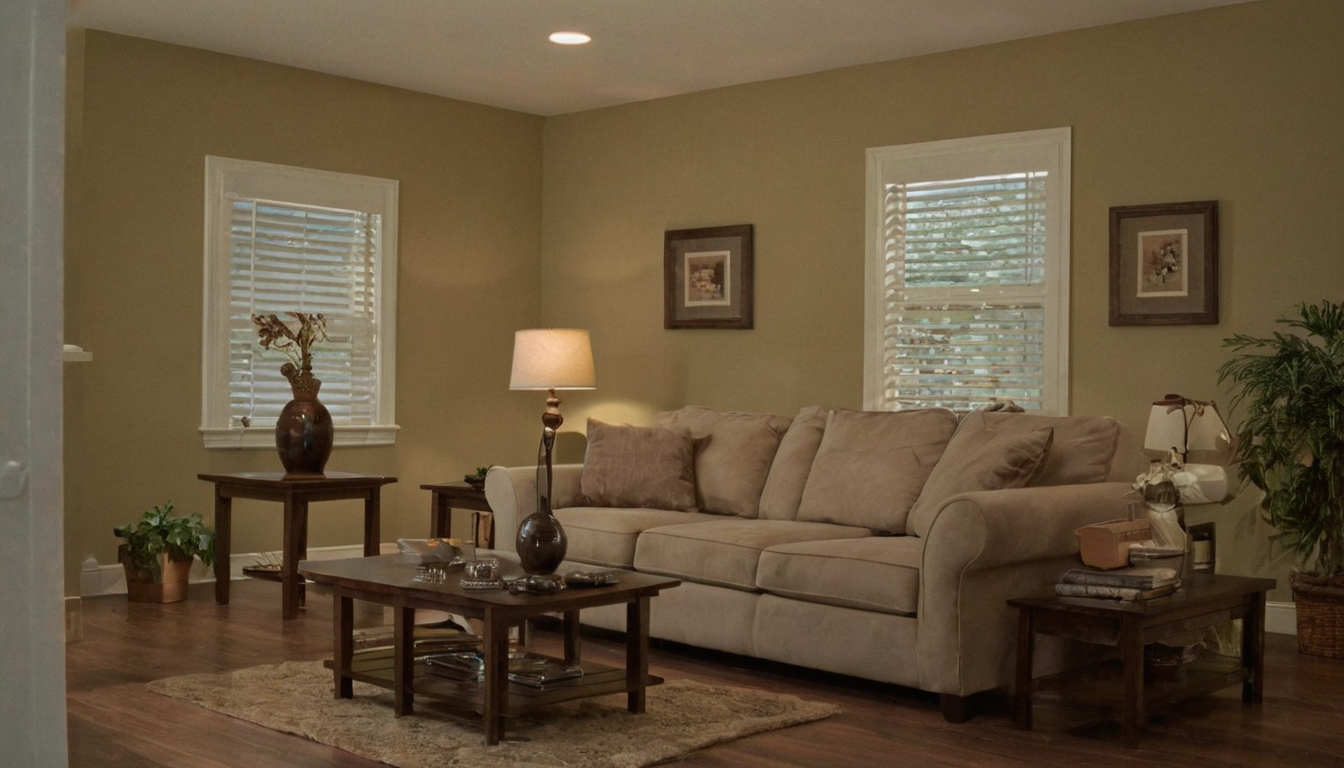
Why Paint Colors Change at Home: Daylight, LEDs, Sheen, and Undertones Explained shown as an editorial planning reference.
Why do paint, textiles, wood, and stone change color under different light sources?
A material’s spectral reflectance interacts with the light source, nearby finishes, viewing angle, and visual adaptation. The object may remain physically unchanged while its apparent hue, brightness, or saturation shifts.
| Factor | Meaning | Residential effect |
|---|---|---|
| Spectral reflectance | The proportion of each visible wavelength a material reflects | Similar neutrals can respond differently to the same lamp |
| Light spectrum | The wavelengths and relative energy supplied by daylight or an LED | A lamp may emphasize a previously quiet undertone |
| Chromatic adaptation | The visual system adjusts its reference for white | A warm room may feel more neutral after several minutes |
| Simultaneous contrast | Large adjacent colors influence perception | Red-toned wood can make a neutral wall appear greener |
Metamerism explains why two matching samples separate under another light
True metamerism requires two materials that match under one illuminant but separate under another. In METACOW, one half uses GretagMacbeth ColorChecker reflectance data and the other a calculated metameric black. The target matches under CIE D65 for the CIE 1931 Standard Observer but maximizes separation under Illuminant A.
The laboratory produced the full-spectral target at 5 nm increments from 380 to 760 nm, at 4200 by 6000 pixels. Its Illuminant A example uses the CIE 2-degree Observer and CIECAT02 chromatic adaptation before conversion to display sRGB. These controlled conditions explain why a phone image cannot reproduce the experiment reliably.
A single paint becoming warmer under a lamp is not necessarily metamerism. It is an illumination-dependent appearance shift. “Undertone” is useful comparison language, but it does not describe the complete reflectance spectrum.
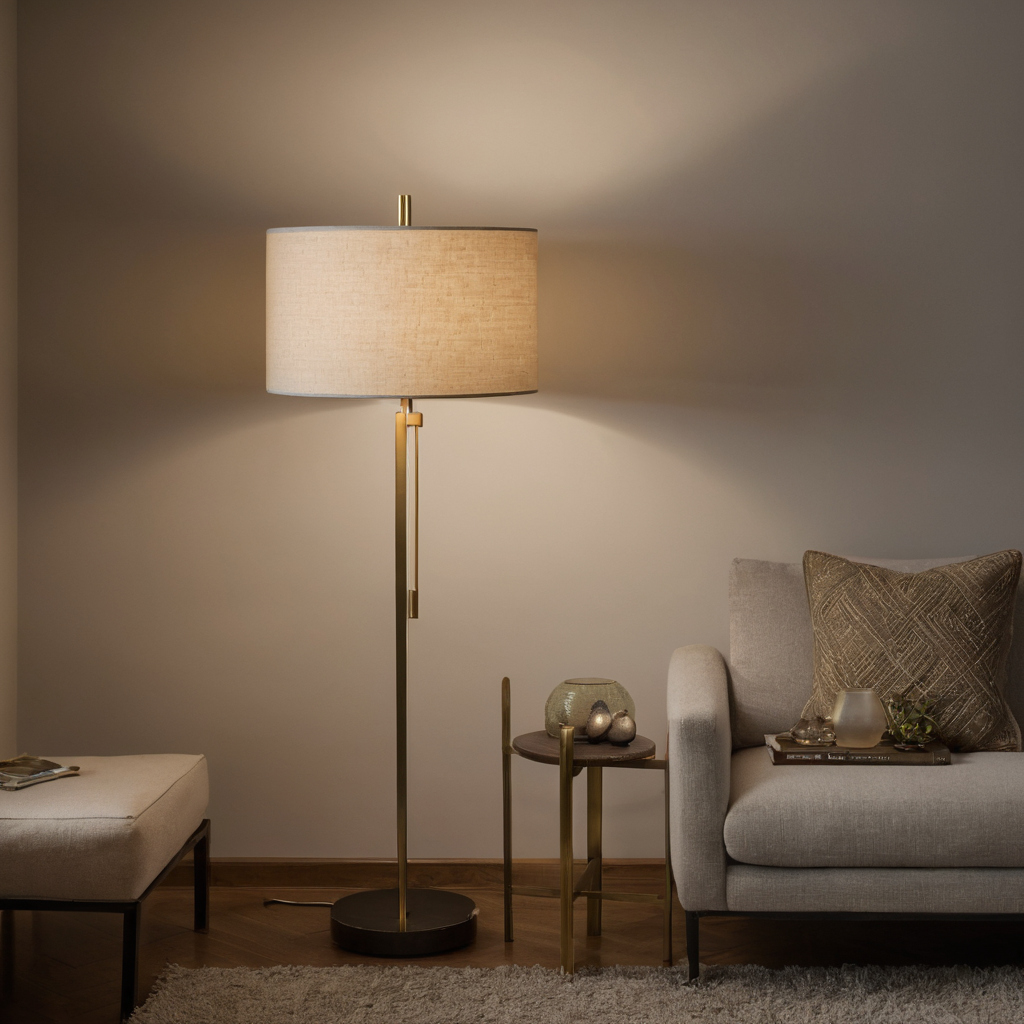
Why do paint, textiles, wood, and stone change color under different light sources shown with floor, wall, and fixture relationships visible.
Adjacent colors and visual adaptation alter the apparent undertone
Flooring, cabinetry, upholstery, and ceilings occupy more visual area than a paint chip. Store samples isolated by white cards therefore provide weak evidence for an installed room.
Appearance shifts must also be separated from physical change. Paint curing, wet stone, oxidizing wood, fading fabric, and soil change the material or its surface. Material selection also carries maintenance and air-quality consequences: the U.S. Environmental Protection Agency lists paints, varnishes, waxes, building materials, furnishings, and cleaning products as common indoor VOC sources. The Natural Stone Institute recommends neutral cleaner, stone soap, or mild dishwashing detergent with warm water for natural stone.
LEDs reduce energy demand but do not eliminate color-selection risk. ENERGY STAR states that qualified LEDs use at least 75 percent less energy and can last up to 25 times longer than incandescent lighting. Daylight orientation remains the first room-specific variable to map.
Window orientation and time of day determine how daylight changes interior color
In a mid-latitude Northern Hemisphere home, east- and west-facing rooms often show strong time-dependent shifts, but season, latitude, glazing, clouds, obstructions, and exterior reflections can override compass direction.
How do north-, east-, south-, and west-facing rooms differ through the day?
| Orientation | Likely direct sun | Typical change | Invalidating variables |
|---|---|---|---|
| North | Limited, mostly diffuse light | Often moderate | High latitude, summer angles, reflected façades |
| East | Morning | Often pronounced before midday | Trees, buildings, clouds, small windows |
| South | Midday, subject to season and shade | Moderate to pronounced | Overhangs, solar altitude, glazing |
| West | Late afternoon | Often pronounced near sunset | Obstructions, weather, seasonal shading |
North and south expectations reverse in the Southern Hemisphere. Equatorial and high-latitude solar paths complicate both labels. A northwest-facing room is conditional because latitude, season, window area, and obstructions determine when direct sun enters.
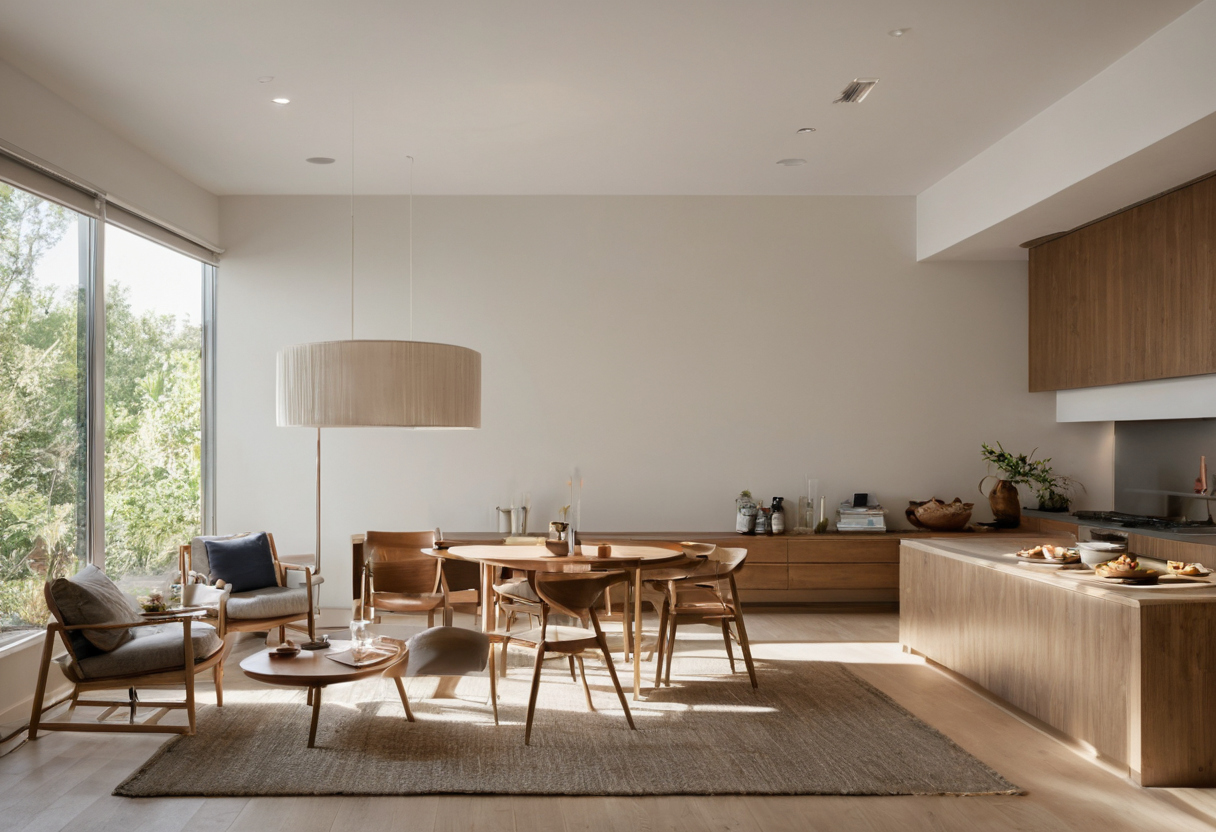
Window orientation and time of day determine how daylight changes interior color shown as an editorial reference for proportion and finish coordination.
Glazing and exterior surfaces can outweigh the room’s compass direction
Tinted, coated, laminated, or low-emissivity glass can reduce visible-light transmission and, depending on its specification, alter spectral balance. Brick, vegetation, water, and neighboring façades can cast reflected color indoors.
- Inspect samples in the morning, at midday, and late afternoon.
- Record direct sun, diffuse skylight, clouds, and exterior reflections separately.
- Repeat observations during the room’s main use period. TeachEngineering’s daylighting exercise similarly bases design on observation and calculation of available sunlight.
Once daylight is mapped, the LED system becomes the next controlled variable.
LED color temperature, color rendering, and dimming change how interior finishes appear
An LED’s kelvin rating describes nominal light appearance, not how every pigment will render. Approve the lamp inside its intended fixture, at the required output and dimming level.
What do CCT, CRI, R9, and TM-30 reveal about an LED?
- CCT: Indicates warmer-to-cooler appearance, not tint or rendering quality.
- CRI and R9: CRI summarizes rendering against reference colors; R9, when reported, adds information about strong reds.
- TM-30: Fidelity describes average accuracy and gamut describes average saturation shift. Neither predicts every material.
- Color consistency: Chromaticity tolerances indicate how closely separate lamps should match.
Equal CCT and CRI labels do not guarantee equal spectra. Multiple spectral distributions can map to the same perceived color under fixed conditions, as Andrew T. Young’s color reference explains. A measured reflectance spectrum can also be converted into CIE color coordinates.
What color light bulb works with white walls?
Warm nominal CCTs often support warm whites, timber, and evening rooms, while cooler light may suit blue-gray whites, cool stone, or tasks. No range is universally correct. Compare actual lamps at similar delivered light levels through the intended shade, diffuser, reflector, or wall washer.
Dimming can shift LED color even when the paint remains unchanged
Fixed-white LEDs mainly reduce output. Dim-to-warm products intentionally lower CCT; tunable-white, RGB, and RGBW systems mix channels. Flicker, uneven low-end output, or unexpected shifts can indicate driver-dimmer incompatibility. Test every programmed scene before diagnosing the painted surface.
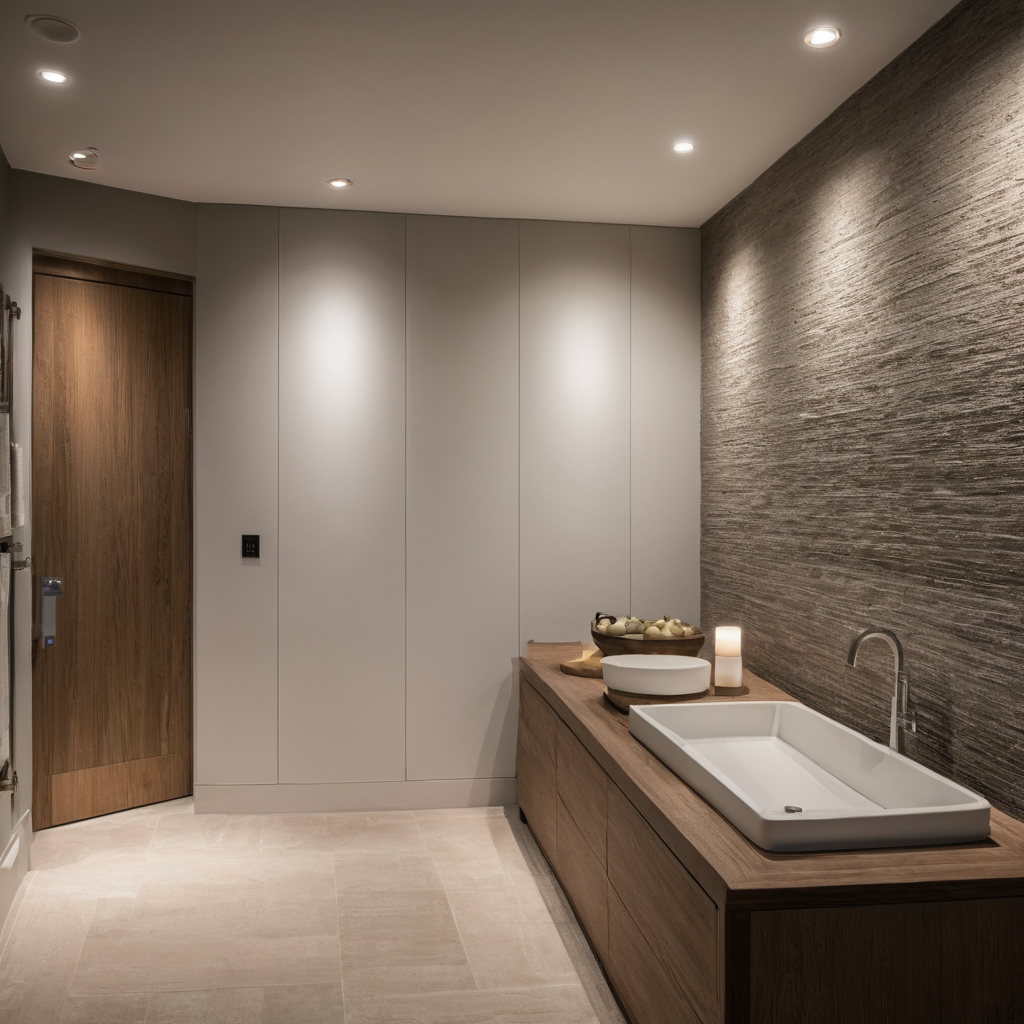
LED color temperature, color rendering, and dimming change how interior finishes appear shown with floor, wall, and fixture relationships visible.
Paint sheen, light reflectance, texture, and substrate alter the appearance of one color
The same nominal color can appear lighter, darker, richer, or less even after changes to sheen, substrate, application, texture, curing, or viewing angle.
Does paint sheen change the color or only its reflections?
Sheen primarily changes reflection, but perception changes with it because color is a visual response governed by viewing conditions. Specular highlights move with the window, fixture, and observer; diffuse reflection spreads light more evenly.
| Finish | Advantage | Limitation |
|---|---|---|
| Flat or matte | Suppresses glare and disguises uneven walls | Washability varies by formulation |
| Eggshell | Adds a restrained highlight | Can expose patching in side light |
| Satin | Clarifies texture and depth | Shows roller marks more readily |
| Semi-gloss or gloss | Supports cleaning and sharp highlights | Emphasizes defects and touch-ups |
Sheen names and gloss ranges vary among manufacturers. Match the intended product line, primer color, substrate porosity, coat count, roller nap, application method, wall texture, and cure state.

Paint sheen, light reflectance, texture, and substrate alter the appearance of one color shown with practical context cues.
Light reflectance value cannot replace a room-specific sample
LRV reports visible light reflected on a 0-to-100 scale under specified measurement conditions. LRV is not undertone, opacity, glare, or guaranteed room brightness. Similar values can conceal different hues and spectral responses.
The EPA recommends increased ventilation while using VOC-emitting products indoors. Judge fully dried samples only after application conditions are controlled, then compare them with the fixed finishes that expose subtle color differences.
Fixed finishes determine which paint undertones become visible in a room
Paint should answer to the least flexible materials: flooring, cabinetry, stone, tile, major upholstery, trim, ceilings, and connected-room views.
Wood, stone, and textiles require production-representative samples
| Material | Approval condition | Risk |
|---|---|---|
| Textile | Correct dye lot, backing, and pile direction | Nap and viewing angle alter appearance |
| Wood | Representative boards with specified finish | Grain, oxidation, and stain absorption vary |
| Stone | Production slab, cut, finish, resin, and sealer | Veining and polish vary across slabs |
| Tile | Current lot with intended grout | Glaze variation and joints change the field |
Large adjacent surfaces matter more than isolated decorative accents
Rank decisions by visual area, permanence, and replacement cost. Installed floors, cabinetry, counters, tile, stone, and major upholstery usually outrank cushions and small objects. Ceiling color and trim can dominate a sightline, while multi-hued materials resist rigid warm-versus-cool rules. Abrasive scouring products can scratch natural stone, according to the Natural Stone Institute, so maintenance belongs in finish approval as well.
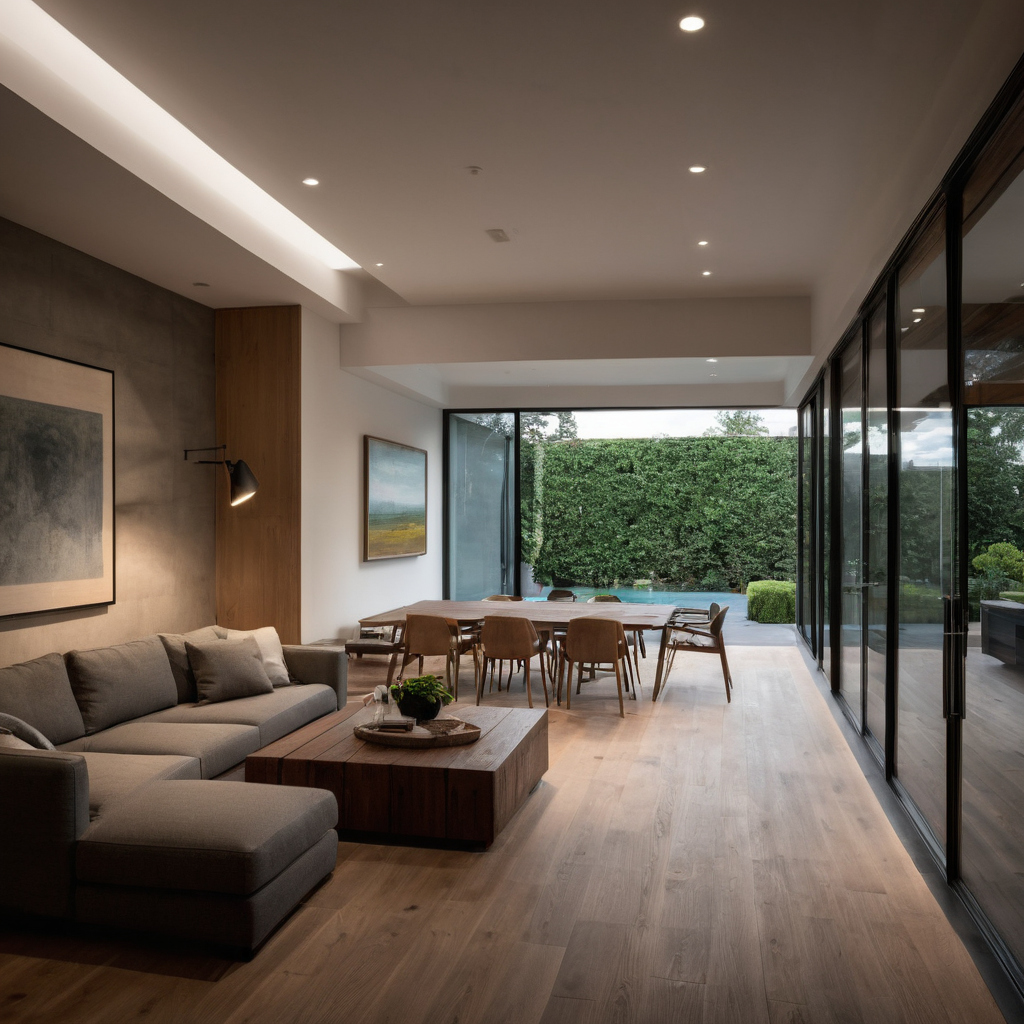
Fixed finishes determine which paint undertones become visible in a room shown as an editorial reference for proportion and finish coordination.
A controlled home mock-up is the safest way to choose paint and material finishes
The safest purchasing method tests production-representative samples in the intended room through its daylight and electric-light cycle. Physical models can study daylight behavior, as TeachEngineering demonstrates with foam-core houses and a desk lamp that simulates the sun. Effective daylighting can also reduce artificial-light demand during useful daytime periods.
How should paint samples be prepared and positioned?
- Follow the manufacturer’s instructions for primer, area, coat count, drying, and curing. Direct application reproduces wall texture; movable boards simplify comparison but may misrepresent the substrate.
- Place samples on several walls beside retained flooring, cabinetry, counters, trim, ceiling, and upholstery. Planning furniture placement before testing wall color makes these adjacencies realistic.
- Observe daylight periods and every nighttime scene. Record weather, position, product, sheen, batch, primer, coat count, fixture, lamp, and dimmer setting.
How should textiles, wood, stone, and LEDs be tested together?
Combine finish-correct wood, sealed stone, grout, metal, textile cuttings with pile direction marked, and the actual LED. View materials vertically and horizontally. Confirm dye lots, boards, slabs, and batches before ordering because substitutions and tinting errors can invalidate approval.
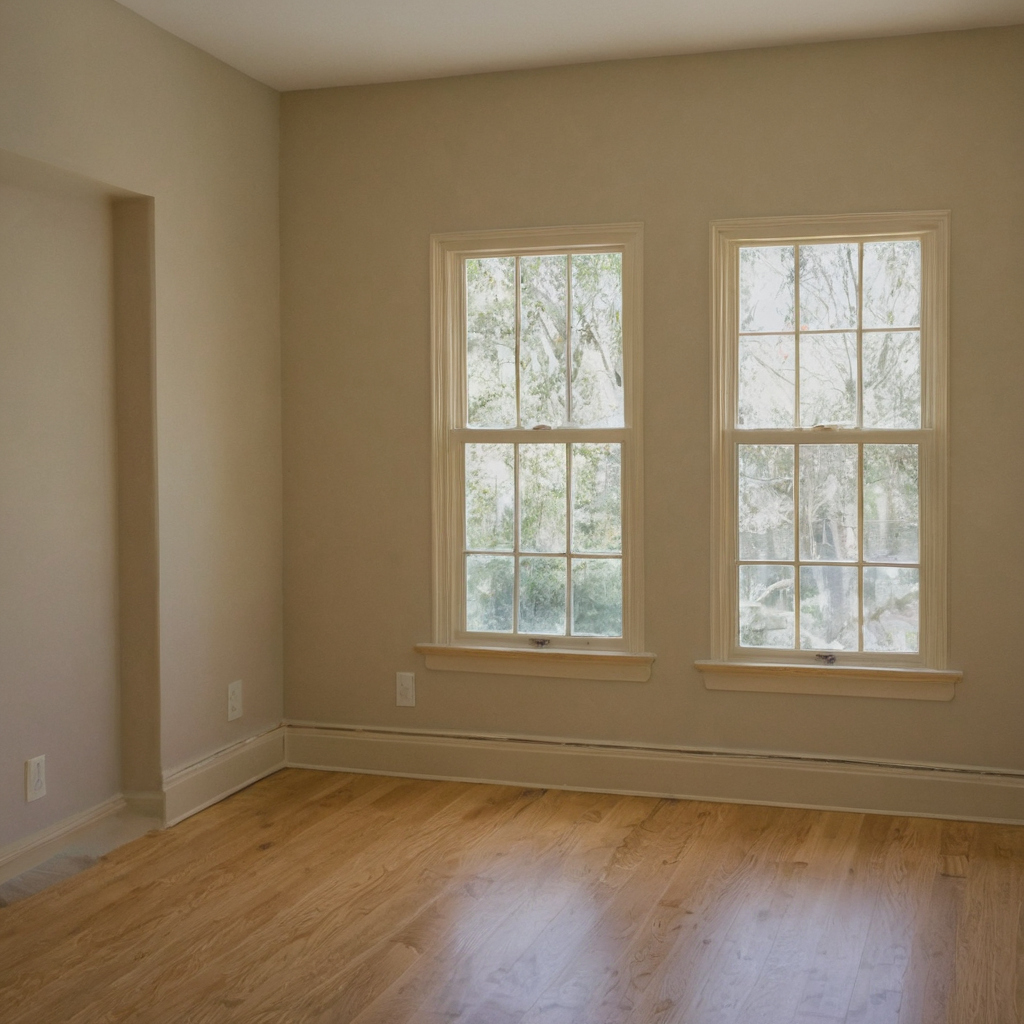
A controlled home mock-up is the safest way to choose paint and material finishes shown as an editorial planning reference.
When is a lighting designer or color consultant worth commissioning?
Professional review can justify its fee for tunable lighting, expensive stone, connected rooms, weak daylight, color-sensitive art, or repeated sample failures. Deciding which interior design services to commission should distinguish color advice from lighting and electrical design. Smartphone white balance, exposure, HDR, and display variation make photographs unsuitable for final approval.
Approve the complete assembly when it remains acceptable during the room’s important use periods, not when it looks identical at every hour.
Frequently asked questions
Does paint sheen change the actual color, or only how the surface reflects light?
Sheen mainly changes reflection, but stronger highlights and viewing-angle effects can change perceived color. Product formulations may also differ between sheen levels.
What color temperature LED works best with white walls?
No single CCT fits every white. Test the actual lamp with the wall, fixed finishes, fixture optics, delivered light level, and intended evening scene.
Why does paint look different in a north- or northwest-facing room?
Diffuse skylight, limited direct sun, seasonal angles, glazing, obstructions, and exterior reflections alter the illumination. Northwest exposure is especially dependent on location and season.
How do I stop LED lights from changing the apparent color of my walls?
You cannot eliminate every shift. Compare lamp spectra, rendering data, tint, dimming behavior, and fixture output, then select the system that keeps the finish acceptable.
Can any paint color reliably make a home look more expensive?
No. Perceived quality depends more on preparation, coherent material relationships, controlled sheen, accurate application, lighting, and maintenance than on a supposedly premium color.